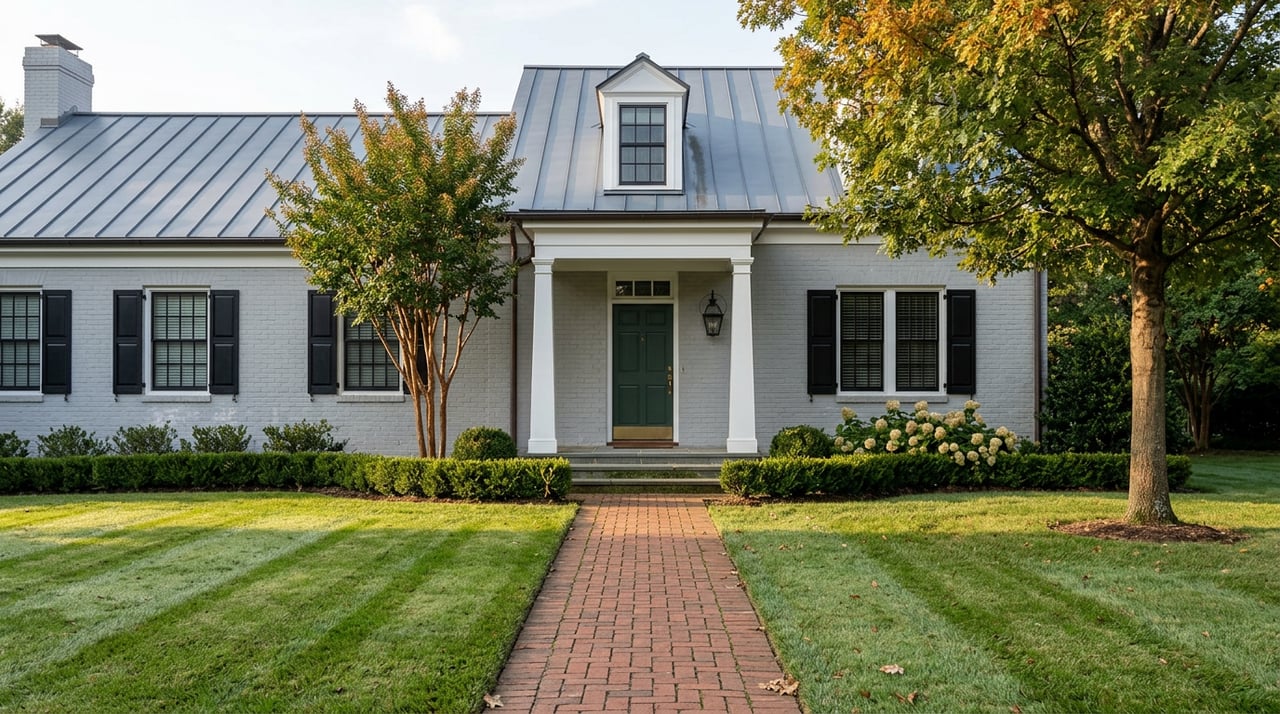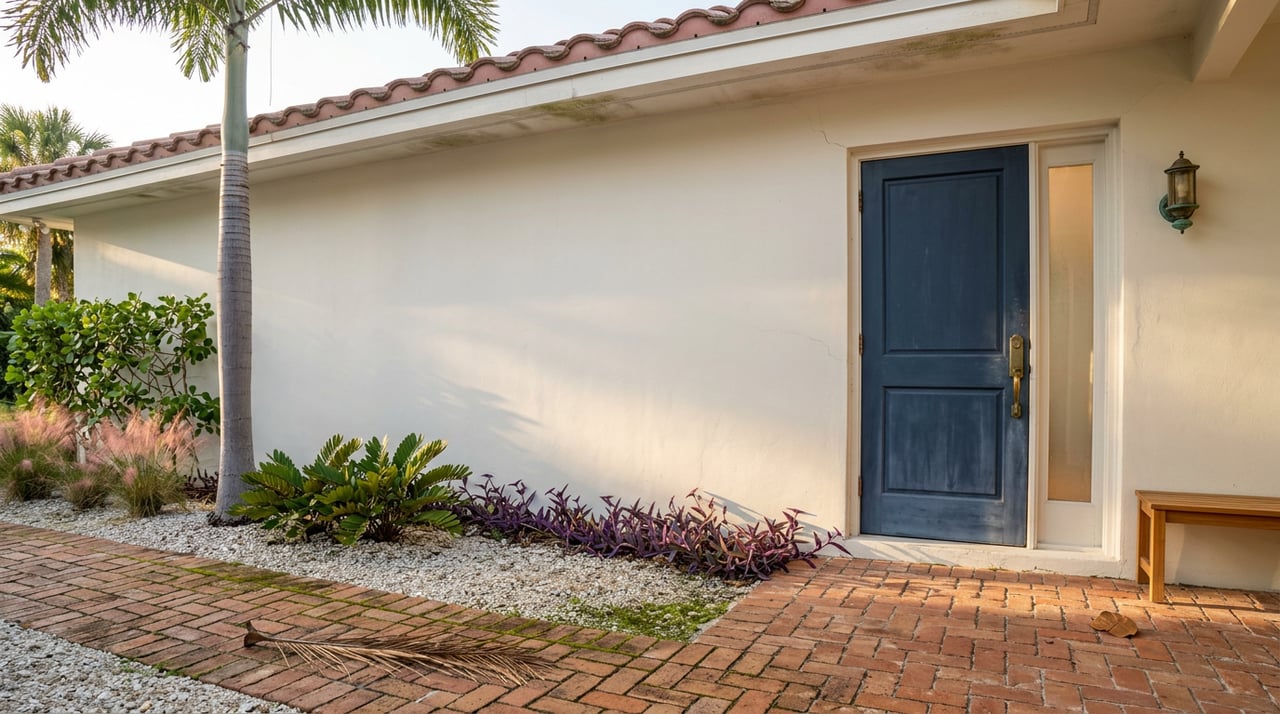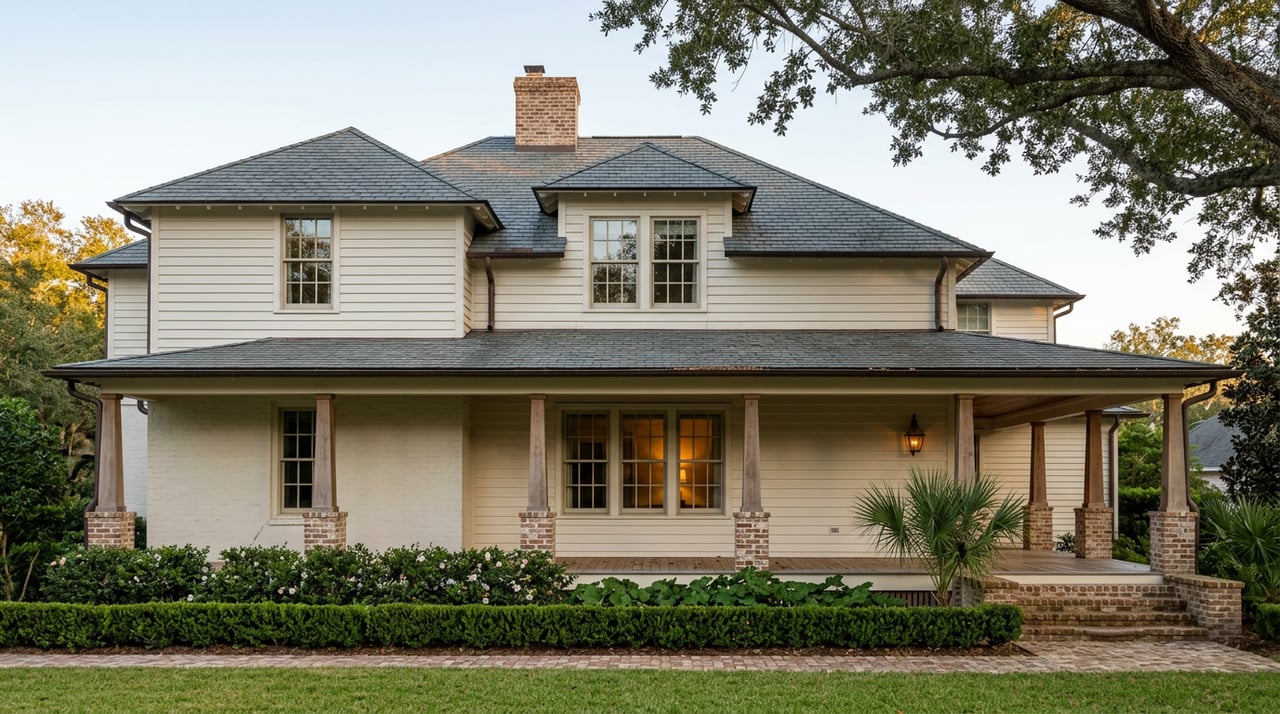
Most people who buy a Craftsman bungalow near the River District or a Mediterranean Revival cottage close to the old Village of Manatee brace themselves for a fight over exterior approvals. They picture a hearing room, a skeptical panel, and a rejected paint sample. That fear is misplaced. The board that reviews exterior changes in Bradenton's two historic districts, the downtown area around the Historic Courthouse and the old Village of Manatee near Manatee Avenue East and 9th Street East, exempts interior work entirely and clears most exterior requests without a hearing at all.
The number that actually reshapes a renovation budget in these neighborhoods never mentions the word historic. It shows up on a flood determination. And it catches owners of century-old homes faster than owners of newer ones, for a reason that has nothing to do with craftsmanship and everything to do with how county appraisers split land value from structure value in these older, larger, river-adjacent lots.
What the Certificate of Appropriateness Actually Covers
Start with what the board does not touch. Interior renovations, from a gut kitchen to a full rewire, generally fall outside historic district design review altogether. The Certificate of Appropriateness requirement applies to exterior alterations and signage on buildings within the two designated districts, and to demolition in some cases. Even within that narrower scope, the process is more forgiving than its reputation suggests. Painting your home doesn't require a certificate if the color matches the approved historic district palette. A new sign doesn't need one either, as long as it follows the district's sign and design guidelines, though it still needs a standard sign permit.
Bradenton's Architectural Review Board handles these certificates. It has six seats, filled by representatives from architecture, urban planning, historic preservation, landscape architecture, and the building trade, with one seat currently open. It doesn't sit on a fixed weekly calendar. It convenes when there's a case on the docket, which means a straightforward exterior request, a new roofline detail or a window swap that matches existing openings, can often be approved administratively without a hearing at all. General applicant questions go to the city at 941-932-9422. Questions about whether a specific parcel actually falls inside one of the two historic district boundaries go to Volker Reiss at 941-932-9402, since the two districts are geographically specific and not every older Bradenton home sits inside one.
None of this is the bottleneck. It's a formality most owners clear in a single conversation with staff.
The Rule That Actually Stops Projects
The rule that reshapes scope and budget is FEMA's substantial improvement standard. If the total value of permitted improvements to a home exceeds half the structure's market value, the entire property must be brought up to current flood elevation standards, regardless of what the work was for. This isn't a historic district rule. It applies to any home in a flood zone, and a meaningful share of Bradenton's older housing stock, particularly along the Manatee River, Wares Creek, and near Palma Sola Bay, sits in AE flood zones where this threshold is a live concern rather than a theoretical one.
Here's where the irony sits. The renovations that trip this threshold, kitchens, panel upgrades, plumbing replacement, are precisely the interior work the Architectural Review Board never reviews. An owner can clear the certificate conversation in an afternoon and still walk straight into a flood compliance requirement that has nothing to do with paint colors or window trim.
The math tends to move faster than people expect in these specific neighborhoods for a structural reason. In older platted areas near the river, where lots are larger and the land itself carries a substantial share of the county's assessed value, the structure's share of that value is often modest relative to a comparable newer subdivision home. A smaller structure value means the fifty percent line, measured against the structure alone, arrives at a lower dollar figure. A renovation that would barely register against a newer home's structure value can consume half of an older home's structure value well before the scope feels finished.
What Renovation Actually Costs in These Neighborhoods Right Now
To see how fast that math moves, it helps to look at current 2026 project ranges specific to Bradenton's older housing stock, where systems replacement carries its own line items beyond standard remodel pricing.
| Scope | 2026 Range |
|---|---|
| Kitchen refresh (counters, backsplash, refaced cabinets) | $25,000–$40,000 |
| Full kitchen remodel, existing layout | $45,000–$75,000 |
| Kitchen with block wall opened, plumbing rerouted | $80,000–$120,000 |
| Hall bath rebuild | $18,000–$30,000 |
| Primary bath, walk-in shower and double vanity | $35,000–$65,000 |
| Galvanized plumbing replacement, Wares Creek-era cottage | $3,000–$8,000 |
| Electrical panel upgrade, River District home | $2,500–$4,500 |
| Structural engineering, block wall opening | $1,500–$3,000 |
| Permit fees (scale with job valuation) | Few hundred dollars–$1,500 |
Straightforward remodels typically clear city or county plan review in two to four weeks now that both jurisdictions run electronic review, though structural or flood-zone scope adds a cycle. Quartz counters run $70 to $110 per square foot in this market in 2026, with quartzite pricing higher. A single full kitchen and bath project sits comfortably in the range that starts pressing against a modest structure valuation, especially once plumbing and electrical inherited from a 1920s or 1930s build get added to the same permit.
None of this is a reason to avoid these neighborhoods. The county's oldest documented residence, the Bartholomew Fogarty House on Riverview Boulevard, built in 1871, listed for $2.15 million in 2024. That price shows the ceiling exists and that these homes reward the work. It just means the sequencing matters more than the paperwork most people worry about.
What This Means If You're Buying or Already Own Here
A few things follow directly from how these two systems actually interact.
- Get a flood zone determination and your home's structure valuation before you finalize renovation scope, not after your contractor has already priced the job.
- Phase permits where it makes sense. Interior systems work that doesn't need board review can sometimes be sequenced across permit cycles rather than bundled into one large valuation that trips the fifty percent threshold in a single filing.
- Confirm your parcel's actual historic district status with the city before assuming either the stricter rules or the exemptions apply. Not every vintage-looking home in Bradenton sits inside the two designated boundaries.
- Budget the systems work honestly. Galvanized plumbing and old panels aren't optional line items on a century-old home, and they count toward the same threshold as your kitchen counters.
- Bring a contractor who can hold both conversations, the certificate process and the flood valuation math, at the same table as your renovation plan, rather than discovering the FEMA threshold mid-project.
That last point is where a broker who also holds a Florida contractor's license changes the outcome. Most agents can tell a buyer which streets sit inside the historic boundary. Far fewer can sit across the table from a structural engineer, price a block wall opening against a flood valuation ceiling, and adjust the renovation sequence before a permit ever gets filed. That's the gap between knowing a neighborhood's history and knowing how to build inside it.
Frequently Asked Questions
Does painting my historic Bradenton home require a Certificate of Appropriateness? No, as long as the color matches the approved historic district palette. Colors outside that palette do require review.
Do interior renovations need approval from the Architectural Review Board? Generally, no. The Certificate of Appropriateness requirement applies to exterior alterations and demolition, not interior work.
How do I know if my renovation will trigger the FEMA fifty percent rule? Compare the total value of your permitted improvements against your home's structure market value, not the land value, as determined for flood insurance purposes. If the total crosses half that structure value, the entire property must meet current flood elevation standards. A flood zone determination early in planning, before scope is finalized, is the only way to know where that line actually sits for your specific property.
If you're weighing a historic Bradenton property, whether as a purchase, a renovation, or both, the sequencing above is exactly where brokerage advice and construction planning need to happen together rather than in separate conversations after the fact. Fuller Group pairs concierge brokerage with Bo Fuller's Florida contractor credentials, so the flood math, the permit sequencing, and the certificate conversation get resolved before you're locked into a scope you can't afford to finish. Arrange a private consultation to talk through your specific parcel before you talk to a contractor.