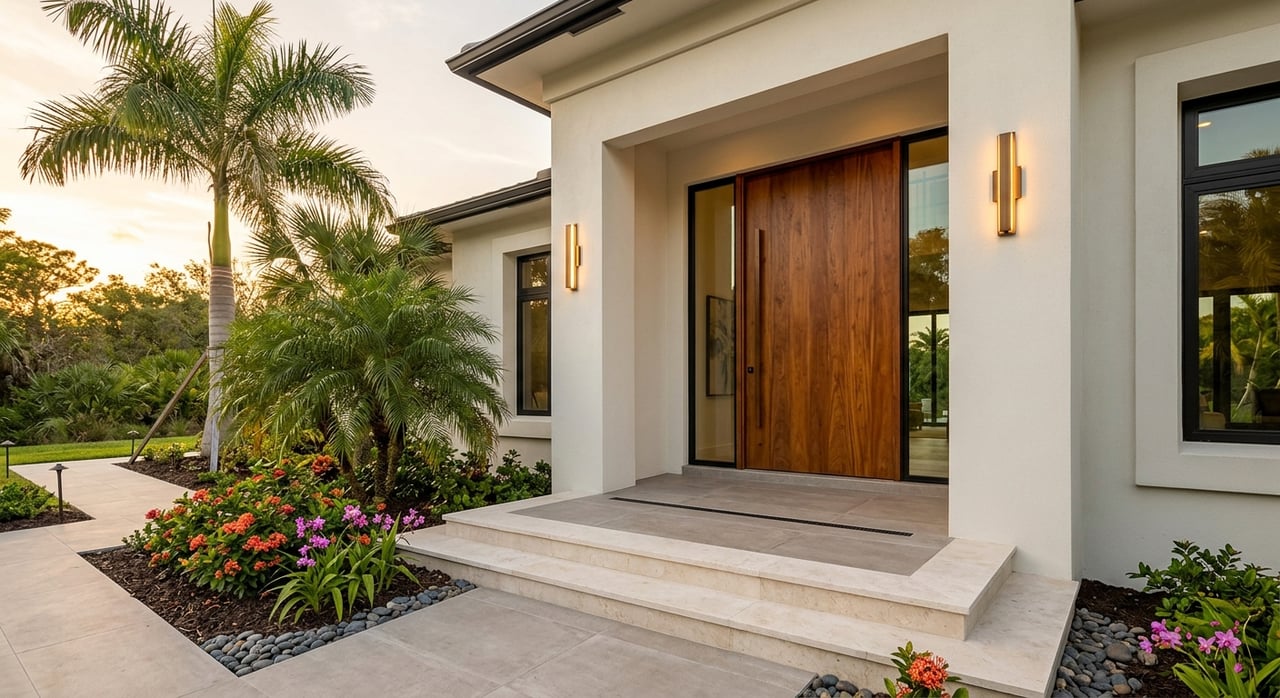
Thinking about buying a brand-new home in Venice? It can be an exciting path, but it also comes with decisions that can affect your timeline, costs, insurance, and long-term peace of mind. If you want a home that fits your lifestyle and feels move-in ready for coastal Florida living, it helps to know what to look for before you sign. Let’s walk through the key things to know so you can buy with more clarity and confidence.
Venice new-construction options
Venice offers a wide range of new-construction choices, from master-planned communities to semi-custom and custom homes. That matters because your best fit is not always about choosing new over resale. Often, it comes down to how much control you want over the lot, floor plan, finishes, and move-in timing.
In the area, communities tied to Wellen Park include options such as move-in ready and quick move-in homes, townhomes, condos, custom estate homes, and semi-customizable luxury homes. Vistera of Venice is described as a gated master-planned community with single-family homes and villas from multiple builders, while Aria in Venice markets 196 homesites, many with lake views.
For many buyers, this means you can choose between convenience and customization. A quick move-in home may help you settle faster and avoid some build delays, while a semi-custom or custom home can give you more design input if you are willing to be more hands-on.
How to match the home type to your goals
If timing matters most, quick move-in inventory may be the simplest route. These homes can reduce decision fatigue and may already include selected finishes and features.
If you want more say in layout, materials, or lot placement, a semi-custom or custom path may be worth exploring. Just keep in mind that more choice often means a longer timeline and more decisions along the way.
Lot choice matters in Venice
In Venice, lot selection can shape both your daily experience and your long-term costs. Builders often charge premiums for larger lots, water views, preserve settings, or preferred positions within a community, and those premiums can change with market conditions.
That is especially important here because Venice includes about 4 miles of Gulf coastline, 2 miles of bay shores, and roughly 4 miles of the Intracoastal Waterway. A lot near water may offer a stronger view or setting, but it can also require deeper flood due diligence before you move forward.
What to verify before choosing a lot
Before you commit to a homesite, make sure you confirm:
- The current flood zone using the latest city guidance
- Whether the builder will provide an elevation certificate before closing
- The finished-floor elevation
- Whether any garage or lanai area sits below Design Flood Elevation
- Whether the setting justifies the premium compared with future carrying costs
According to the City of Venice flood zone information, updated flood maps were adopted on March 27, 2024. The city also notes that homes in the Special Flood Hazard Area are subject to the 50 percent rule, and the Florida Building Code requires one foot of freeboard above Base Flood Elevation to create Design Flood Elevation.
Flood insurance is a separate decision
One of the biggest misconceptions about a new home is that newer automatically means lower flood risk. In Venice, that is not a safe assumption. Flood review should be part of your buying process whether the home is already finished or still under construction.
The City of Venice states that standard homeowners insurance does not cover flood damage. The city also notes that flood insurance must be purchased through the National Flood Insurance Program and that there is a 30-day waiting period before coverage takes effect. Venice participates in the NFIP Community Rating System, which provides a 25 percent discount, according to the city’s floodplain guidance.
Questions to ask about flood exposure
As you compare homes and lots, ask clear questions early:
- What flood zone is this lot in today?
- Will I receive an elevation certificate before closing?
- Where are major utilities located and elevated?
- Are garage or storage areas below the Design Flood Elevation?
- What does this location mean for insurance costs over time?
These details can help you compare two similar homes more accurately, especially when one carries a premium for water adjacency or a view.
Check the builder and permit trail
A polished model home does not replace due diligence. Before you move forward with a builder, verify the company and confirm that the work is moving through the proper local process.
The Florida Department of Business and Professional Regulation says buyers should verify the contractor license by name or license number and check both the business entity and the individual contractor who qualifies that business. You can review license information through the Florida DBPR construction industry resources.
The City of Venice also offers the eTRAKiT portal for searching permits, contractors, and inspection activity. That can give you another layer of confidence that the home is progressing through the city’s normal permitting and inspection process.
A simple due-diligence workflow
If you want a practical way to evaluate a builder, start here:
- Verify the builder’s state license status.
- Confirm the qualifying individual tied to the business.
- Review available permit and inspection records through the city portal.
- Plan for an independent inspector with new-construction experience.
This is especially helpful in active communities where several builders may offer similar floor plans and similar pricing.
Yes, you still need inspections
Many buyers assume a new home does not need an inspection because it is brand new. In reality, new does not always mean perfect.
Florida Realtors recommends phase inspections during key points in construction, including the foundation stage, before walls are sealed, and again near the 10- to 11-month mark. That last walk-through can be especially useful because it gives you time to identify issues while you are still within the builder’s warranty period.
Best times for inspections
If your contract and timing allow, consider inspections at these stages:
- Foundation stage
- Pre-drywall stage, before walls are closed
- Final walk-through before closing
- Warranty-period review around months 10 to 11
This approach can help you catch concerns early, document them clearly, and make better use of available warranty coverage.
Understand the builder warranty
Florida law gives buyers an important baseline protection on newly constructed homes. Under Florida Statute 553.837, a builder must warrant a newly constructed home for one year after title conveyance or initial occupancy, whichever occurs first, for defects in equipment, material, or workmanship that result in a material violation of the Florida Building Code.
That warranty transfers during the initial year, but it also has limits. The statute notes exclusions such as normal wear and tear, settling, defects caused by others, and damage from natural disasters.
It is also important to understand that a builder warranty is different from a home warranty. In general, builder warranties focus on structural components, materials, and workmanship, while home warranties usually focus on appliances and systems.
Choose upgrades with long-term value
Upgrades can add up quickly in new construction, so it helps to prioritize items that improve resilience or are hard to retrofit later. In Venice, this often matters more than purely cosmetic selections.
The Florida Office of Insurance Regulation says consumers may gain insurance premium savings by installing windstorm mitigation features. The City of Venice also notes that elevating the home and utilities can materially reduce flood risk.
Upgrades worth extra attention
If you are deciding where to invest, pay close attention to:
- Roof systems and roof quality
- Front-door and opening protection choices
- Utility placement and elevation
- Water intrusion resistance
- Other hard-to-retrofit resilience features
These upgrades may support durability, maintenance, and insurance outcomes over time. By contrast, some finish upgrades are easier to change later if your priorities shift.
A smart Venice buying strategy
Buying new construction in Venice can be a great fit if you want modern design, lower near-term maintenance, and the chance to tailor your home to your preferences. The key is to look beyond the model and evaluate the lot, flood considerations, builder history, inspection plan, warranty coverage, and upgrade choices as one complete picture.
That kind of planning is where experienced guidance makes a real difference. If you want a more curated, detail-oriented approach to buying a new home in Venice, the Fuller Group offers private consultations designed to help you evaluate communities, builders, lot positioning, and long-term value with greater confidence.
FAQs
Do I need an inspection on a new construction home in Venice?
- Yes. Florida Realtors recommends phase inspections during construction and another review near the end of the builder warranty period because new homes can still have defects.
How do I verify a Venice home builder before buying?
- Check the builder’s license through Florida DBPR, confirm the qualifying individual, and review permit and inspection activity through the City of Venice process.
Do I need flood insurance for a new home in Venice?
- You may, depending on the lot and flood zone. Standard homeowners insurance does not cover flood damage, and Venice buyers should review current flood maps and insurance timing carefully.
What upgrades are most worth it in Venice new construction?
- The most important upgrades are often resilience-focused items such as roof quality, opening protection, utility elevation, and water-intrusion resistance features that are harder to add later.
Are lot premiums in Venice new communities worth paying?
- Sometimes, but it depends on the lot’s setting, flood exposure, insurance impact, and long-term carrying cost. A premium lot should be evaluated as both a lifestyle choice and a financial decision.