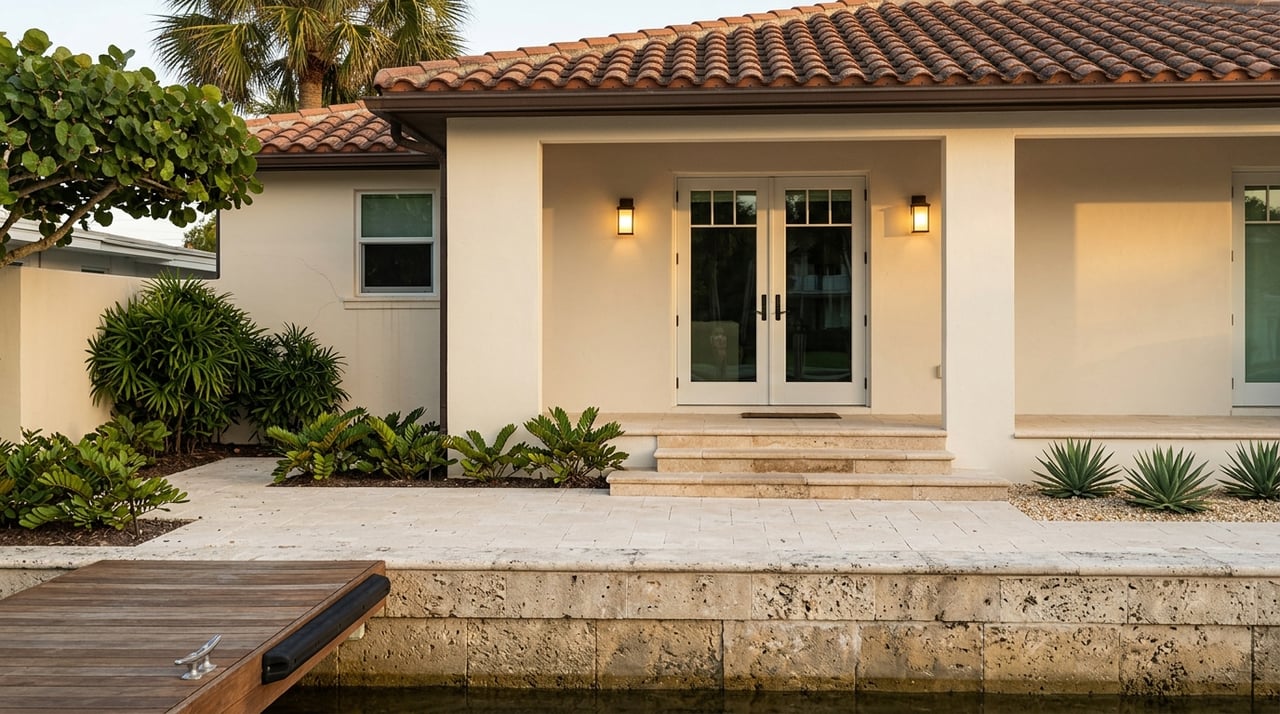
Buying an older waterfront home in Bradenton Beach can feel exciting right up until the practical questions start piling up. Is the charm worth the upkeep, will the property meet current flood rules, and how much work could be waiting behind the walls? If you are considering a historic or long-held coastal home here, the smartest move is to evaluate it as a residence, an insurance file, and a permit path all at once. Let’s dive in.
Why Bradenton Beach Needs Extra Review
Bradenton Beach is not a typical inland resale market. The city states that the entire city is in a flood zone, which means floodplain rules are not a side note during your purchase process.
That local setting matters even more when you are looking at an older waterfront home with character. Bradenton Beach is known for its Old Florida feel, and Bridge Street sits at the center of the Historic Old Town District, so location and architectural charm often play a big role in value.
For you as a buyer, that means two things can be true at once. A home may offer irreplaceable coastal character, but updates to the exterior may require more planning than they would on a newer property.
Start With Floodplain Facts
Before you think about finishes, start with the parcel itself. The City of Bradenton Beach says its building department reviews zoning, stormwater, floodplain, and building-code compliance, and some barrier-island projects may also require Florida Department of Environmental Protection coastal permits or FEMA-related documentation.
One of your first questions should be simple: what does the current FEMA flood map show for the property? FEMA’s Flood Map Service Center is the official source for flood hazard maps, and it helps you confirm whether the parcel sits in a special flood hazard area.
You should also ask whether an elevation certificate already exists. Bradenton Beach maintains elevation certificates on file when they have been provided, and that document can shape your understanding of compliance, insurance, and future renovation scope.
Historic Status Can Affect Renovation Plans
Not every older home is in a historic district, but you should never assume renovations will be straightforward until you verify the property’s status. In Manatee County, properties in Historical and Archaeological Overlay Districts may require Certificate of Appropriateness review.
The City of Bradenton also routes exterior alterations in its historic districts through an Architectural Review Board. The practical takeaway is that if a parcel sits in a historic or overlay district, exterior work may need an added layer of review before you move forward.
This does not mean you should avoid the property. It means your planning should respect the home’s scale, roofline, and defining exterior features from the start, rather than treating approvals as an afterthought.
Focus on Coastal Wear and Tear
Older waterfront homes age differently than properties farther inland. FEMA’s coastal guidance notes that saltwater environments speed up corrosion in metal connectors and fasteners, while moisture-related decay remains a major coastal hazard.
That is why your inspection lens should stay trained on the places where coastal wear often shows up first. In many homes, those are the roof edge, trim, balcony connections, and exposed framing.
Termites, rain intrusion, and ponding on low-slope roofs are also recurring coastal concerns. On a showing, those issues may not always look dramatic, but they can signal a larger repair path once a licensed inspector takes a closer look.
Watch Roof Flashing Closely
Roof flashing deserves special attention in an older waterfront property. FEMA says damaged or poorly sealed flashing can allow water intrusion that leads to leaks, corrosion, dry rot, and mold growth.
If you notice staining, rust, or patched areas around roof penetrations, treat that as more than cosmetic aging. It may point to hidden moisture issues that affect both repair cost and insurance underwriting.
Check Lower-Level Systems
Electrical and mechanical systems can be especially vulnerable in flood-prone homes. FEMA notes that floodwaters can corrode and short-circuit electrical components, and that switches, wiring, and receptacles below the base flood elevation should be limited to the minimum needed for life safety.
If the home has utilities installed low in the structure, that should move high on your due-diligence list. In practical terms, older homes with lower-level electrical panels, HVAC equipment, or other key systems may need closer review before you can gauge true ownership cost.
Review Elevated or Lower-Level Construction
If the house includes an elevated living area or a lower enclosure, ask how that lower level was built and improved over time. FEMA guidance points to flood-resistant materials, utility protection, anchoring, and, where appropriate, openings or breakaway walls.
This matters because lower-level spaces are often where buyers discover past work that does not align with current floodplain expectations. What looks useful in photos may need further evaluation before you rely on it as finished living space or future renovation opportunity.
Do Not Ignore Seawalls and Shoreline Work
A waterfront home includes more than the house itself. Seawalls, bulkheads, riprap, docks, and other shoreline improvements can all affect the value and future maintenance profile of the property.
Florida DEP treats shoreline stabilization as a regulated activity, including permit pathways for seawall or bulkhead work and related construction. That means you should ask for permit history and any available records showing that prior shoreline work was properly authorized.
Visible condition matters, but paperwork matters too. A seawall that looks serviceable at first glance may still require follow-up if permit history is incomplete or future repair work could trigger additional review.
Insurance Should Start Early
In Bradenton Beach, insurance should be part of your purchase timeline from the beginning. Florida officials stress that standard homeowners policies usually do not cover flood damage, so flood insurance must be purchased separately.
The Florida Office of Insurance Regulation also notes that homes in high-risk areas with federally backed mortgages generally require flood insurance. On top of that, Citizens says most new and renewing personal residential policies with wind coverage will need flood coverage by January 1, 2027, under a phased rollout.
For older homes, underwriting can become more detailed. The Florida Department of Financial Services says insurers may require a four-point inspection covering the roof, plumbing, electrical wiring, and HVAC, and they may also request a roof inspection or a wind-mitigation inspection.
If an insurer requests an inspection and it is not provided, coverage can be jeopardized. That is why it makes sense to start insurance conversations while you are still in due diligence, not after closing is around the corner.
Wind Mitigation Can Affect Cost
The Florida Office of Insurance Regulation says consumers can save on premiums through windstorm damage mitigation. That makes construction details such as roof attachment, opening protection, and other wind-resistant features more than just building questions.
They can directly affect what you pay to insure the property. For an older waterfront home, understanding those details early helps you compare the true cost of ownership between properties that may look similar on the surface.
Understand the 50 Percent Rule
One of the biggest budget traps in an older waterfront purchase is assuming renovation cost is just about what you can see. In floodplain areas, code-driven thresholds can change the entire scope.
Manatee County says substantial improvement is measured over a one-year period and includes reconstruction, additions, repairs, rehabilitation, alterations, and other improvements whose cumulative cost equals or exceeds 50 percent of the building’s market value. Bradenton Beach adds that the calculation includes finish materials, labor, overhead, profit, and demolition of undamaged components.
That means a project can cross the threshold faster than many buyers expect. If your planned scope triggers substantial improvement or if the structure is substantially damaged, the city says the building must be brought into compliance with flood-damage prevention rules.
In Bradenton Beach, that can include elevating the building to or above the 100-year flood elevation and moving electrical, mechanical, bathroom, and laundry functions above that level. For a buyer, that is not a small detail. It can be the difference between a light renovation and a major capital project.
Build a Smarter Budget
When you evaluate an older waterfront home, your first dollars should go toward information rather than finishes. Survey work, elevation certificates, contractor estimates, insurance inspections, and, in some cases, structural or marine engineering can help you understand the real project before design choices take over.
A practical budget usually includes these categories:
- Inspection and due-diligence reports
- Elevation and survey documentation
- Roof and flashing repairs or replacement
- Plumbing, electrical, and HVAC updates
- Foundation, piling, or structural review
- Utility elevation or flood-related compliance work
- Storm protection and opening upgrades
- Seawall, dock, or shoreline repairs
- Permit and design-review costs where applicable
- A larger contingency for hidden conditions
The key is separating visible upgrades from code-driven work. In older coastal homes, hidden conditions and compliance triggers often shape the budget more than the cosmetic wish list.
A More Disciplined Buying Approach
The strongest waterfront purchases in Bradenton Beach usually begin with a clear checklist. Instead of asking only whether you love the home, ask whether the building condition, flood exposure, insurance path, and permit history all support your long-term plan.
That approach is especially valuable if you are buying a legacy property, second home, or renovation candidate where lifestyle and capital improvements go hand in hand. A beautiful setting and timeless exterior can absolutely be worth pursuing, but only when the numbers and compliance path make sense too.
For buyers who value both design and diligence, older waterfront homes can offer something truly special. The goal is not to avoid complexity. The goal is to understand it early enough to make a confident decision.
If you are weighing a waterfront purchase in Bradenton Beach and want a more informed, private evaluation process, Fuller Group offers concierge-style guidance backed by real construction insight, curated search support, and thoughtful project planning.
FAQs
What should you check first when buying an older waterfront home in Bradenton Beach?
- Start with the parcel’s flood-zone status, elevation information, permit history, and overall building condition before focusing on cosmetic upgrades.
Does every Bradenton Beach property face floodplain review?
- The City of Bradenton Beach says the entire city is in a flood zone, so floodplain compliance is a core part of evaluating any property there.
Can a historic designation affect renovations in the Bradenton area?
- Yes. Properties in local historic districts or overlay districts may require additional design or appropriateness review before exterior changes are approved.
Why do older waterfront homes need special insurance planning?
- Older homes may need four-point, roof, or wind-mitigation inspections, and standard homeowners insurance usually does not cover flood damage.
What is the substantial-improvement rule for Manatee County waterfront homes?
- Manatee County measures substantial improvement over one year, and if cumulative work reaches or exceeds 50 percent of the building’s market value, additional floodplain compliance requirements may apply.
Should you ask about seawall or dock permits on a Bradenton Beach property?
- Yes. Shoreline stabilization and similar waterfront improvements are regulated, so permit history should be part of your due diligence.