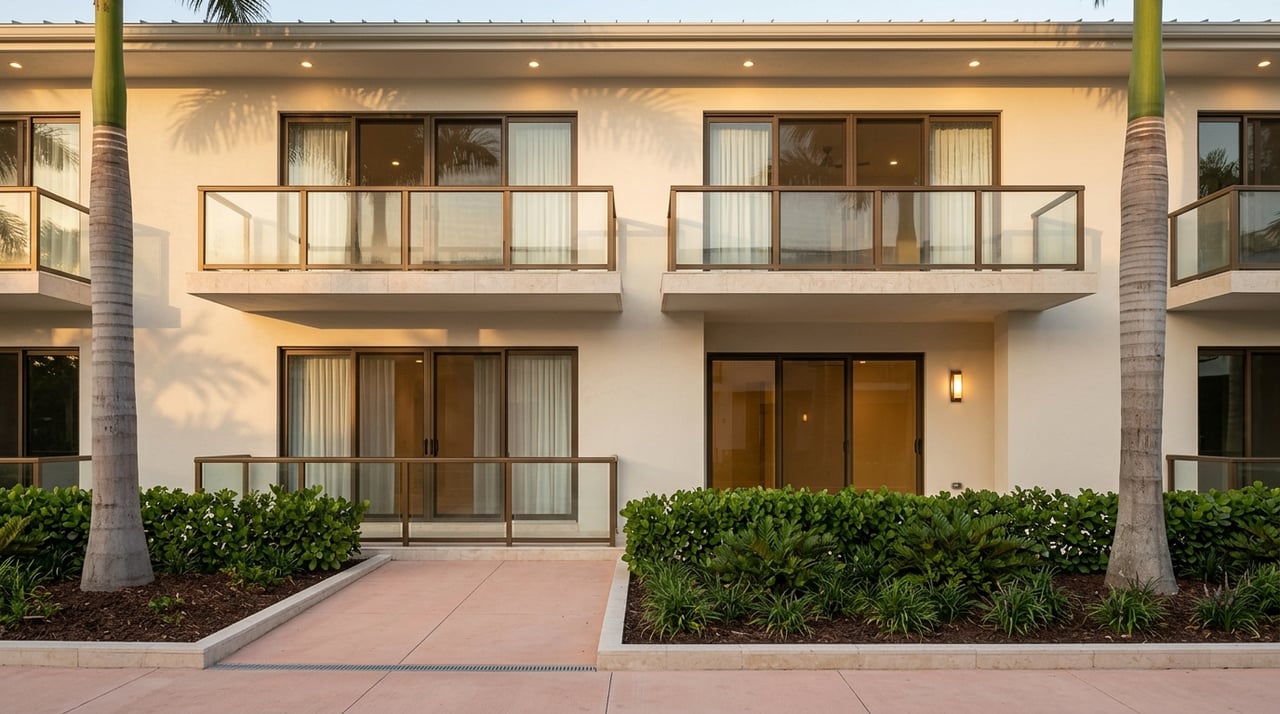
If you are weighing a luxury condo against a coastal home in Venice, you are not just choosing square footage. You are choosing an ownership style, a maintenance rhythm, and a level of control that should match how you want to live. In a market shaped by seasonal demand, strong owner occupancy, and real flood and insurance considerations, the right fit comes down to clarity. Let’s dive in.
Venice ownership starts with lifestyle
Venice is a relatively small coastal city with 30,477 residents, and its housing profile tells an important story. Census data shows that 80.4% of homes are owner-occupied, 61.4% of residents are age 65 and older, and 84.2% of people age 1 and up lived in the same house one year earlier.
That kind of stability supports two very different luxury ownership paths. Some buyers want a lock-and-leave condo that feels easy to manage during travel or seasonal use. Others want a detached coastal home with privacy, outdoor living, and more direct control over the property.
Sarasota County also sees a notable winter population increase, rising from about 487,640 permanent residents to more than 570,000 in season. That seasonal pattern helps explain why both condos and coastal homes continue to attract the same broad pool of second-home buyers, retirees, and full-time owners.
Why Venice condos appeal
A condo can offer a polished, simplified way to enjoy Venice luxury living. If you want less exterior upkeep and a more streamlined ownership experience, condo living often checks those boxes.
Under Florida condominium law, the association operates the condominium and has the authority to maintain, repair, replace, and assess for common elements and association property. In practical terms, that shared structure is what gives condo ownership its lower-maintenance appeal.
For many buyers, that means fewer day-to-day concerns tied to building exteriors, roofing, grounds, and shared systems. It can be especially attractive if you split time between homes or want a residence that is easier to leave for weeks or months at a time.
Condo comfort comes with governance
The tradeoff is that convenience is tied to shared decision-making. When you buy a condo, you are also stepping into the association’s financial planning, maintenance approach, and board governance.
That does not make condo ownership less desirable. It simply means your due diligence should go deeper than finishes, views, and amenities. In Venice, a well-run association can support a predictable ownership experience, while a poorly documented one can introduce avoidable uncertainty.
Condo costs are not just monthly dues
One of the most important questions for a luxury condo buyer is whether monthly carrying costs are likely to stay predictable over time. That means looking beyond the current association fee and asking how reserves, inspections, and insurance are structured.
Florida law requires condominium associations to maintain official records that include declarations, bylaws, current rules, insurance policies, structural integrity reserve study documents, inspection reports, permits, accounting records, contracts, and meeting minutes. These records must be made available to a unit owner within 10 working days after a written request, and they can be provided electronically.
If you are comparing Venice condo options, these records can reveal far more than a property brochure ever will. They help you understand how the building is being managed, whether future capital needs are being addressed, and how the association communicates major decisions.
What to know about older or taller condos
In Florida, older or taller condo buildings now require extra attention. This is one of the most important details luxury buyers should understand before choosing condo comfort in Venice.
Florida law requires a structural integrity reserve study, often called a SIRS, at least every 10 years for residential condominium buildings that are three stories or higher. For owner-controlled associations existing on or before July 1, 2022, that study had to be completed by December 31, 2024.
The law also limits how certain reserve funds can be used in budgets adopted on or after December 31, 2024. In addition, Florida’s milestone inspection law requires inspections for buildings three habitable stories or more by age 30 and every 10 years after that, with local enforcement agencies allowed to require age 25 when proximity to salt water justifies it.
For a Venice buyer, these rules matter because coastal exposure can affect building timelines, budgeting, and future assessments. A luxury condo may still be the ideal fit, but the quality of the association’s planning is a core part of the purchase decision.
Coastal homes offer more autonomy
A coastal single-family home gives you a very different kind of luxury. Instead of shared governance and common-area management, you gain more privacy, more storage, more outdoor living space, and greater freedom to tailor the property to your preferences.
That kind of ownership can be deeply appealing if you value independence. It may also be a better match if you want more room for entertaining, a private pool, expanded garage space, or a broader connection to the lot and landscape.
In HOA-governed neighborhoods, Florida’s homeowners’ association statute centers the association’s authority on common areas and other improvements for which it is responsible, while the governing documents define exact duties. In practice, that usually means you take on more direct responsibility for the parts of the property that are not assigned to the association.
More freedom usually means more responsibility
The same features that make a coastal home feel more personal also make it more hands-on. Exterior maintenance, storm readiness, insurance details, and repair planning often sit more directly with you than they would in a condo setting.
That is not necessarily a drawback. For many luxury buyers, it is the point. If you want full control over landscaping, outdoor design, storage needs, and property improvements, a detached home often provides that flexibility.
For buyers considering renovation, upgrades, or long-term property positioning, this is also where construction insight can become especially valuable. Understanding the practical implications of exterior systems, site conditions, and permitting can help you make a more confident decision before you buy.
Coastal rules matter near the shoreline
If you are looking at homes close to the beach, there is another layer to consider. Florida’s Coastal Construction Control Line program regulates structures and activities that can contribute to beach erosion, destabilize dunes, damage upland properties, or interfere with public access.
That means beach-adjacent ownership can involve additional permitting and review. If you are evaluating a luxury coastal home in Venice, it is wise to ask early about any shoreline-related construction limits or approval requirements tied to the property.
This does not mean a coastal home is overly complicated. It means the property should be evaluated on its actual site conditions, not just its curb appeal or location on a map.
Flood zones should guide both choices
In Venice, flood diligence is not optional for condos or homes. The City of Venice notes that every part of Florida is in a flood zone, and the key issue is the level of risk.
The city also adopted FEMA’s 2024 flood zone maps. For buyers, that makes the flood map and a property-specific flood risk check essential parts of the buying process.
Financing can also be affected. FEMA states that federally regulated, supervised, or insured lenders require flood insurance for buildings located in a Special Flood Hazard Area.
For luxury buyers, the takeaway is simple. Whether you prefer a condo or a detached home, you should verify the exact flood designation for the specific parcel and understand how that may affect insurance requirements and carrying costs.
Rental plans need local review
If you are buying with part-time use in mind, lease flexibility may matter almost as much as the property itself. Sarasota County says rental rules depend on zoning district.
In many residential single-family and multifamily districts, leases must be at least 30 days and short-term rental use is not allowed. Some barrier-island RMF districts allow shorter leases.
That makes it important to confirm local rules before you purchase based on a rental plan. If seasonal income is part of your strategy, zoning and association restrictions should be reviewed early in your search.
Condo or home: which fits you best?
The better choice is usually the one that matches your time horizon, privacy preferences, and tolerance for shared governance or direct property responsibility. In Venice, both models can work beautifully, but they serve different priorities.
Here is a simple side-by-side view:
| Ownership Style | Often Best For | Main Considerations |
|---|---|---|
| Luxury Condo | Buyers who want lock-and-leave convenience, shared maintenance, and a more standardized operating structure | Association governance, reserves, inspections, master insurance, possible assessments |
| Coastal Home | Buyers who want privacy, land, outdoor space, and more control over the property | Flood exposure, exterior maintenance, insurance complexity, coastal permitting, owner-led upkeep |
If you want predictability and simplicity, a condo may feel more aligned. If you want autonomy and a deeper sense of place, a coastal home may be worth the added responsibility.
A smart Venice buyer checklist
Before you move forward on either path, keep your due diligence focused on the details that shape long-term ownership.
For any Venice luxury property
- Verify the flood zone and property-specific flood risk.
- Review likely insurance requirements and deductible structure.
- Confirm how seasonal use or full-time ownership fits your goals.
- Check local lease rules if rental flexibility matters.
For a Venice condo
- Review the association’s current rules and governing documents.
- Ask for reserve information, including any SIRS documents if applicable.
- Review milestone inspection status for buildings that qualify.
- Examine master insurance details and owner coverage responsibilities.
- Read recent meeting minutes and accounting records for signs of upcoming changes.
For a Venice coastal home
- Confirm owner maintenance responsibilities inside and outside any HOA structure.
- Ask about storm-related repairs, exterior systems, and insurance complexity.
- Review any coastal construction or shoreline permitting questions early.
- Consider how much time and oversight you want to devote to the property.
In a market like Venice, luxury is not only about the view or the address. It is also about how comfortably the ownership structure fits your life. If you want a discreet, highly tailored way to compare coastal condominiums and single-family opportunities in Venice, Fuller Group can arrange a private consultation built around your goals.
FAQs
What makes a Venice condo feel easier to own than a coastal home?
- A Venice condo often appeals to buyers who want shared exterior maintenance and a more lock-and-leave ownership model, though that convenience comes with association governance and shared financial decisions.
What should buyers review before purchasing a Venice luxury condo?
- Buyers should review condo records such as bylaws, rules, insurance policies, reserve documents, inspection reports, accounting records, contracts, and meeting minutes to better understand budgeting and building management.
How do flood zones affect Venice condos and coastal homes?
- Flood zones can affect both property types because Venice uses updated flood maps, and lender flood insurance requirements may apply when a property is located in a Special Flood Hazard Area.
Are older condo buildings in Venice subject to extra review?
- Yes, Florida law requires structural integrity reserve studies and milestone inspections for certain condominium buildings that are three stories or higher, which can influence future budgeting and maintenance planning.
What is the main advantage of a Venice coastal home?
- A Venice coastal home usually offers more privacy, storage, outdoor space, and freedom to customize the property, but it also places more maintenance and storm-related responsibility on the owner.
Can you rent out a Venice luxury property seasonally?
- Rental options depend on the property’s zoning district and, for condos or HOA communities, any governing restrictions, so buyers should confirm local lease rules before relying on seasonal rental plans.